
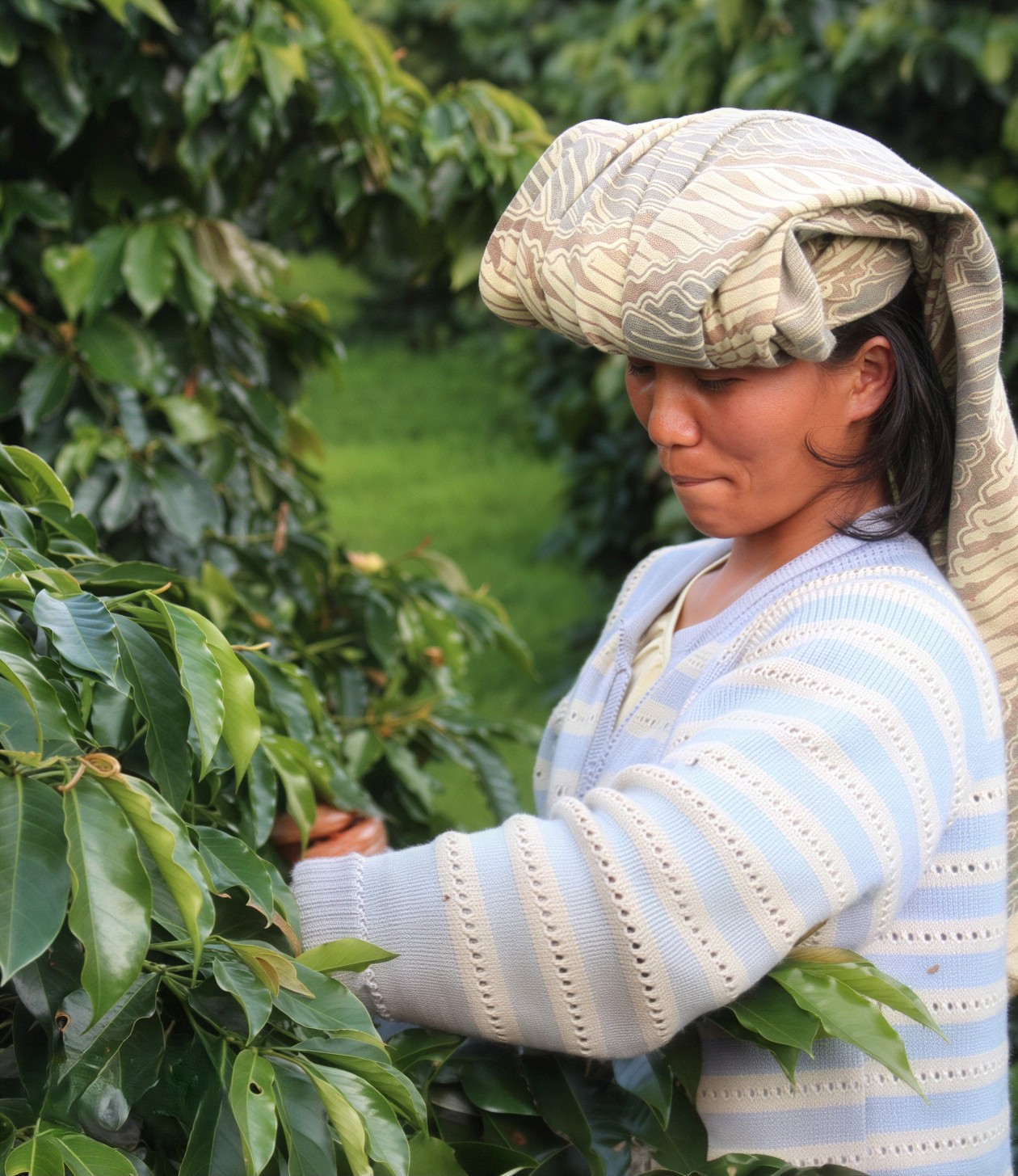
Ijen Plateau, East Java Island
Washed
ARABICA
Typica, Ateng, Kartika, Catimor
1100-1600
Dec-Mar / May-Sep
132.28
Coffee in Indonesia has a history of more than 300 years, strongly shaped by Dutch colonization. Today, the country is the world’s fourth-largest coffee producer, with East Java at the center of this tradition. Most Arabica here is grown on the historic estates of Blawan, Jampit, Pancoer, and Kayumas, founded during colonial times and later managed by the government through PTP, the state-owned organization created in 1894. The remaining production comes from smallholder farmers working on modest plots with traditional methods. Women and younger generations now play a vital role in every stage—from planting and harvesting to processing and selling—ensuring both continuity and renewal of coffee culture in the region. At high altitudes, particularly in Blawan and Jampit, the estates benefit from volcanic soils and a unique plateau microclimate. Unlike most Indonesian coffees, often semi-washed, these are fully washed, with about 36 hours of fermentation, careful drying, and hand-sorting. The result is a consistent, clean, and refined cup profile.

Cupping Notes